Cedar vs. Heat-Treated Hemlock for a Cold Plunge
Cedar and heat-treated hemlock are the two most common wood shells for a stave-built cold plunge tub, and the choice mostly comes down to budget versus tradition. Heat-treated hemlock runs 20 to 35 percent cheaper and performs nearly as well once properly sealed, while cedar carries natural rot resistance, a warmer color, and the scent most people associate with a premium wood tub. Here is how to actually decide between them for daily use.
How Is Each Wood Prepared Before It Becomes a Tub?
Western red cedar goes into a tub largely as-is, relying on the natural oils and tannins already in the wood grain for rot and insect resistance, the same properties that have made it a standard choice for outdoor barrels and siding for a long time. Heat-treated hemlock starts as a less naturally durable softwood and goes through a controlled kiln process, heated to a high temperature for an extended period, which changes the wood’s cell structure and reduces its capacity to absorb moisture. Done well, that process gets hemlock’s water resistance into the same general range as untreated cedar, but the result depends heavily on how carefully the treatment was controlled, which is harder for a buyer to verify from a spec sheet alone.
Which One Actually Handles Standing Water Better?
Cedar’s advantage here is consistency. The rot resistance is built into the wood itself rather than dependent on a manufacturing step, so it tends to be more forgiving of minor gaps in maintenance over the years. Heat-treated hemlock, when the treatment was done properly, holds up to standing water nearly as well, but a poorly executed treatment batch will show weaknesses sooner, typically as slight swelling at stave seams or a faster onset of surface graying. Neither wood is meant to hold water directly against bare grain for years without a liner, which is why almost every manufactured cold plunge shell today, cedar or hemlock, ships with a food-safe interior liner or sealant rather than relying on the wood alone.
What Is the Real Price Difference?
Heat-treated hemlock is the budget-conscious choice by a meaningful margin, typically running 20 to 35 percent less than a comparable cedar tub. For a buyer choosing primarily on function, that gap is often enough to justify hemlock outright, especially since a quality liner does most of the water-barrier work regardless of which wood sits underneath it. For a buyer who wants the traditional look, the deeper reddish-brown tone, and the characteristic cedar scent that still comes through even with a liner installed, that premium buys something a spec sheet does not fully capture.
How Do the Two Woods Compare on Weight and Handling?
Cedar is a relatively lightweight softwood, which keeps a stave-built shell easier to move into position before it is filled and plumbed in. Heat-treated hemlock lands in a similar weight range, since the treatment process changes moisture resistance more than it changes density. Neither wood makes a meaningful difference in how the finished tub needs to be handled during installation, so this factor rarely tips the decision either way. What does matter more is the tub’s overall footprint and whether the delivery path to its final spot, a gate, a stairway, a narrow side yard, can actually accommodate it fully assembled or requires on-site assembly.
Does Climate Change Which Wood Makes More Sense?
In consistently humid climates, both woods perform well once sealed, since the liner is doing most of the moisture-barrier work and the shell itself experiences less extreme swings in ambient moisture. In very dry or high-altitude climates with repeated freeze-thaw cycles, cedar’s natural oil content gives it a modest edge against checking, the fine surface cracks that can develop in wood exposed to repeated expansion and contraction over years. Heat-treated hemlock holds up reasonably well too, but buyers in harsher dry climates who plan to keep a tub for a decade or more often lean toward cedar for that added margin.
What Should a Buyer Actually Look for When Comparing Options?
Confirm what liner or sealant ships with the tub rather than assuming the wood is doing the waterproofing alone, ask whether the hemlock, if considering it, was heat-treated by a named process with a stated temperature and duration rather than a vague “treated” label, and check stave thickness, since a thicker stave in either wood adds both durability and a bit of thermal mass that can help hold cold water temperature slightly longer between chiller cycles. Buyers weighing a specific rectangular model against both wood options can compare current stave material, liner details, and pricing at the SweatDecks the rectangle plunge collection and a few other specialty retailers before settling on one.
How Does Each Wood Age Once It Has Been in Use for Years?
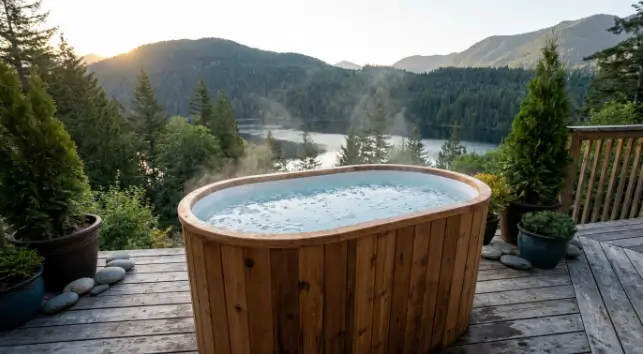
Cedar tends to weather toward a soft silver-gray on any exposed exterior surface, a well-known characteristic that many owners consider part of the material’s appeal rather than a flaw, while the interior, protected by a liner and rarely exposed to direct sun, holds its color and grain much longer. Heat-treated hemlock ages in a broadly similar direction on exposed exterior surfaces, though the starting tone is generally lighter and the graying can appear slightly more uneven if the heat treatment was not applied consistently across every board. Neither wood requires refinishing on the interior surface where the liner does its job, and exterior staining or sealing, if an owner wants to slow the graying process, works on both species using the same basic products sold for outdoor wood furniture and siding.
Is There a Wrong Answer Here?
Not really, for daily use. Both woods, properly treated or naturally resistant, and both properly sealed with a quality liner, will hold up for years of regular cold plunge use. The decision comes down to how much the traditional cedar look, scent, and slightly better long-term dry-climate durability are worth against a 20 to 35 percent lower price for hemlock. Buyers on a tighter budget lose little in practical performance by choosing hemlock, and buyers who want the full traditional wood-tub experience generally know it and are willing to pay for cedar specifically.
Frequently Asked Questions
Is cedar or heat-treated hemlock more water resistant for a cold plunge? Cedar’s natural oils give it inherent resistance without treatment. Heat-treated hemlock gets comparable resistance from a kiln process, though treatment quality varies by supplier.
Which wood costs less for a cold plunge shell? Heat-treated hemlock generally costs 20 to 35 percent less than cedar for a comparable tub.
Does a wood cold plunge need to be sealed? Most manufactured shells include a food-safe liner or sealant from the factory, since raw wood alone is not ideal for holding treated water long-term.
Does climate affect the choice between cedar and hemlock? Both handle freeze-thaw cycles reasonably well once sealed, but in very dry climates cedar’s natural oil content gives it a slight edge against cracking over many years.
References
- Effects of cold-water immersion on health and wellbeing: A systematic review and meta-analysis, PLoS One, 2025
- Effects of cold water immersion after exercise on fatigue recovery and exercise performance: meta analysis, Frontiers in Physiology, 2023
- Cold-water immersion (cryotherapy) for preventing and treating muscle soreness after exercise, Cochrane Database of Systematic Reviews, 2012
By Nathan Pryce